
TDB Hanoi is investing in aluminum cold backward extrusion to expand its manufacturing options for hollow, cup-shaped components.
The project brings together forming equipment, tooling, blank preparation, and a calcium aluminate coating and lubrication system.
This aluminum cold backward extrusion case study documents the technology being introduced and the areas requiring validation. Quantified results for productivity, cost, and tool life remain subject to production data.
Aluminum cold backward extrusion case study: the manufacturing challenge
Deep cavities and closed-end cylindrical bodies can make the choice of manufacturing route important.
Depending on the drawing and production volume, creating the cavity through forming may offer an alternative to removing the entire internal volume by machining.
TDB’s development approach is to evaluate a formed blank first, then determine which CNC operations are required to achieve the finished specification.
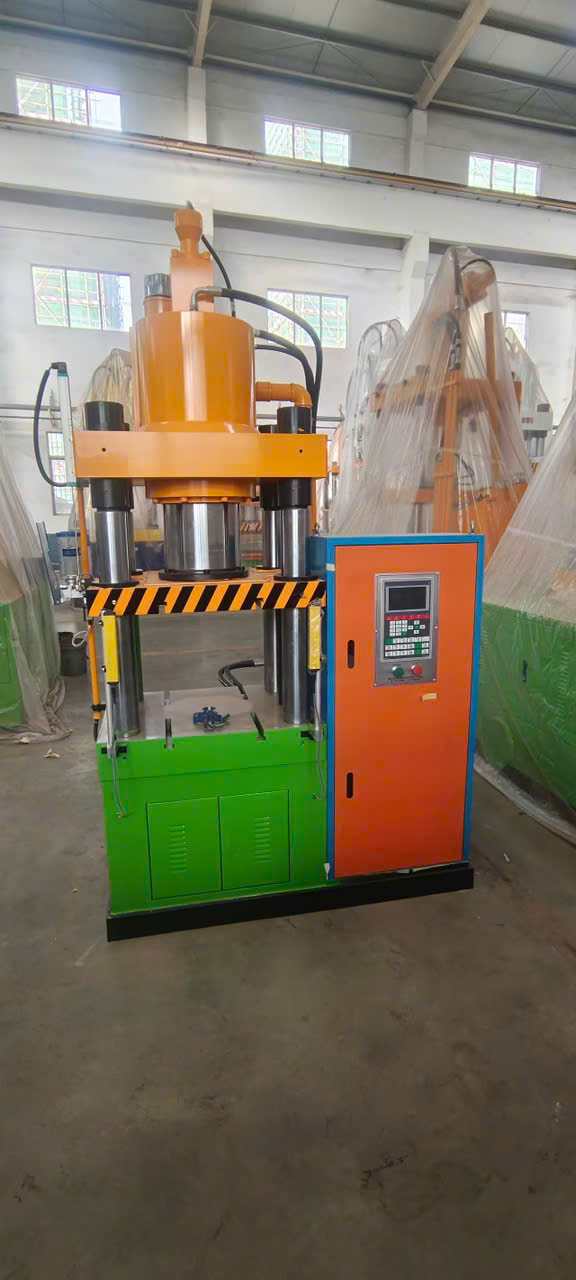
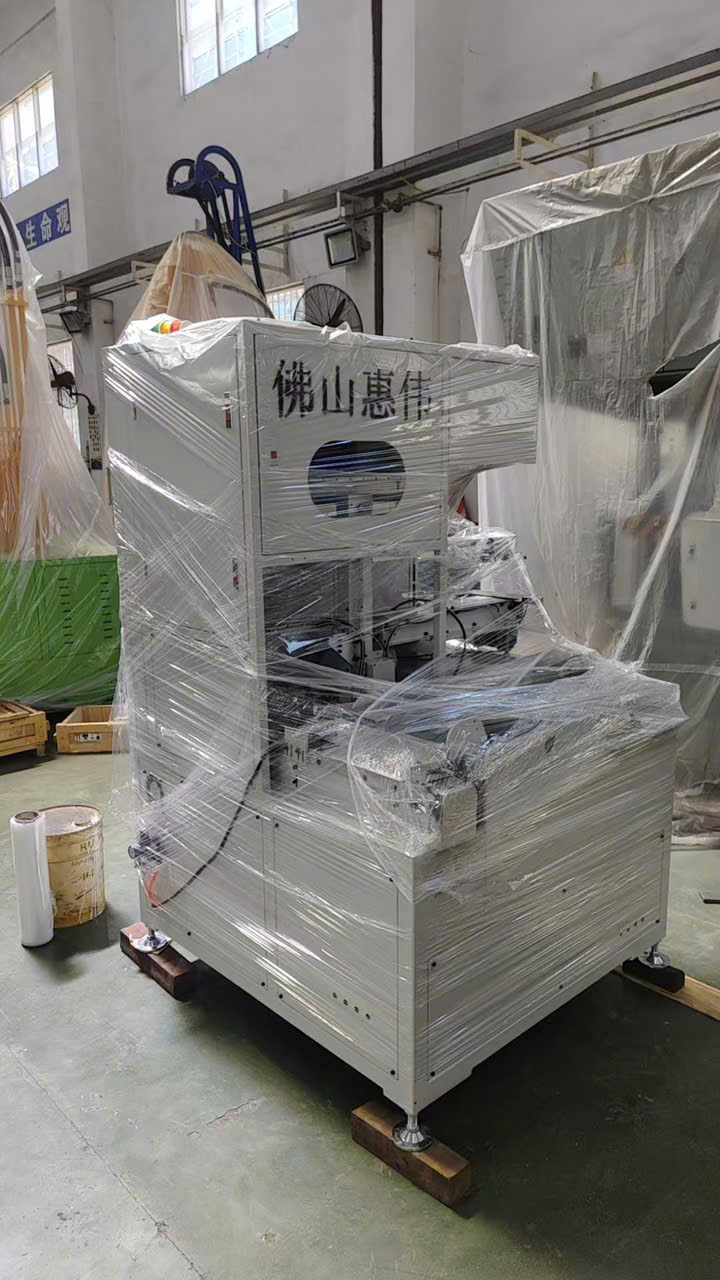
Project equipment photographs
Project overview
| Item | Project information |
|---|---|
| Technology | Aluminum cold backward extrusion |
| Illustrative component form | Hollow cylindrical cup with a closed bottom |
| Incoming material | 6063-T5 aluminum |
| Surface preparation system | Calcium aluminate conversion coating combined with lubricant |
| Project equipment | Four-column hydraulic press |
| Project stage | Technology investment and implementation |
The project concerns hollow, cup-shaped components with a closed bottom.
Dimensional capability, mechanical properties, and production capacity require inspection and process records.
Surface preparation as part of the forming route
TDB is using calcium aluminate treatment combined with lubricant before forming.
The conversion layer and lubricant are treated as parts of one compatible surface preparation system. Their performance must be evaluated under the actual material, tooling, and operating conditions.
The project identifies 6063-T5 as the incoming material. Any intermediate heat treatment must be recorded separately to establish the condition of the blank when it enters the press.
What the validation program needs to establish
Component conformity
Inspection must determine whether the samples meet the applicable drawing requirements.
Depending on the component, this may include internal and external dimensions, wall and bottom thickness, surface condition, and specified functional characteristics.
Process stability
A useful trial must show how the process behaves over a sequence of parts.
Relevant observations include load or pressure trends, stripping behavior, aluminum pickup, and changes in product quality as operating conditions develop.
Manufacturing economics
The comparison with another manufacturing route must include blank preparation, surface treatment, tooling, forming, inspection, and finishing.
Pressing time alone is not a complete measure of manufacturing cost.
These are proposed validation criteria, rather than reported project results.
Combining formed blanks with CNC machining
TDB is evaluating cold forming and CNC machining as complementary stages.
The extrusion process can be assessed for creating the main hollow body. Subsequent machining can address drawing-specific features such as threads, grooves, datum surfaces, and precision interfaces.
The amount of finishing required must be established from actual formed-part capability.
Lessons for the implementation team
Technology development requires coordination between engineering, production, and quality.
Changes to material, tooling, surface treatment, or machine settings should be traceable. This allows the team to compare trials, investigate abnormalities, and reproduce successful conditions.
Documenting the process also turns individual experience into knowledge that can be shared across the company.
Through this investment, TDB Hanoi is expanding its options for manufacturing aluminum components. Application suitability will be established through product-specific feasibility assessment, trials, inspection, and process validation.
From development samples to an approved manufacturing route
The next decision is whether a particular customer component can be produced through a repeatable sequence that satisfies its drawing and material requirements. The project should connect each sample to the blank batch, preparation route, tooling revision and forming conditions. These records make it possible to distinguish a promising sample from an approved production process.
This aluminum cold backward extrusion case study reports an implementation project, rather than a completed comparison with quantified savings. A product-specific review should establish the formed geometry first, identify the finishing operations and then assess the complete manufacturing route. Acceptance of the final component remains tied to the agreed inspection and testing plan.
For the general process, see aluminum cold backward extrusion explained. Chemetall’s cold-forming guidance provides technical context for treatment and lubricant systems; it is not evidence of TDB project performance. Contact TDB Hanoi with the drawing, alloy, quantities and required component condition to discuss feasibility and a validation scope.