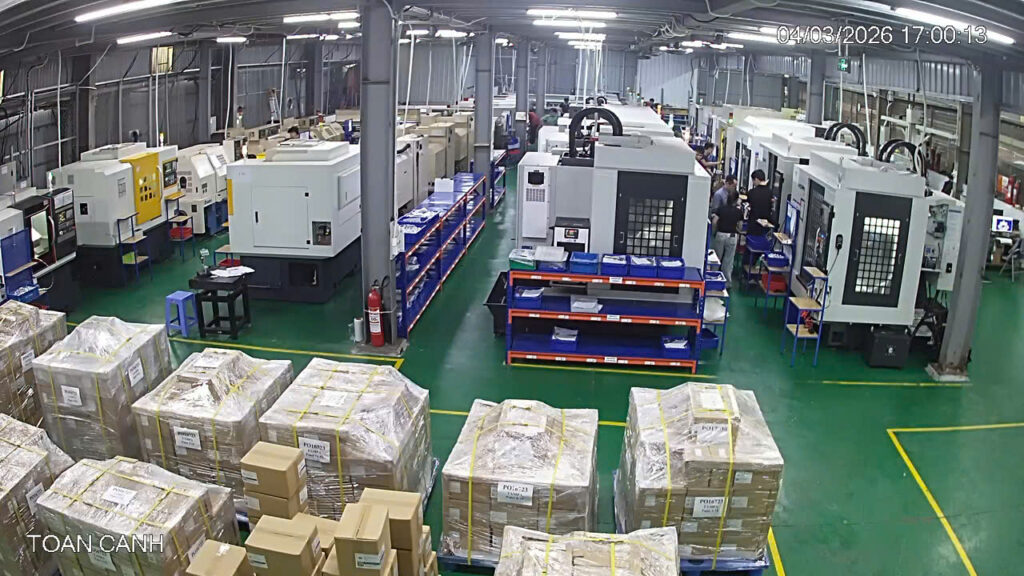
Shipping CNC parts from Vietnam to the US, Germany or Canada requires a clear handover plan: accepted parts, suitable packaging, an agreed transport rule, consistent shipment documents and destination-specific import checks. Confirm classification, origin and applicable charges for the actual goods and shipment date. “CNC machined” is a manufacturing description, not one universal customs code or duty treatment.
Plan export and import responsibilities while reviewing the quotation, rather than after the parts are packed. This guide is a coordination checklist; your importer, customs broker and freight provider should verify the transaction-specific requirements before dispatch.
Separate the dates in the delivery promise
Record design approval, material availability, production completion, final inspection, buyer release where required, carrier pickup, transit, customs clearance and arrival. A factory completion date is not a delivered-at-customer date. Identify which milestone the supplier has quoted and which dependencies remain outside it.
Use the CNC lead-time guide to establish when the manufacturing clock starts and stops. Review whether missing buyer approvals, changed files or missing importer information affect the schedule. Transit and clearance should remain estimates unless a specific service commitment is agreed.
Choose transport according to the actual shipment
Compare courier, air freight and sea freight using chargeable weight or volume, package dimensions, value, required arrival, handling risk and customs arrangements. A small urgent replacement batch and a recurring pallet shipment may need different services. Do not compare carrier charges without checking what collection, brokerage, insurance or destination handling is included.
Confirm who books the shipment and provides the carrier account, if used. Ask how tracking, exceptions and delivery appointments will be communicated. Avoid publishing a universal transit promise: route availability, service scope, clearance and final delivery can change the result.
State the Incoterms rule, named place and edition
Official US trade guidance on Incoterms distinguishes rules for any transport mode from those for sea and inland waterway transport. FOB belongs to the latter group; it should not be used as a generic label for every courier or air shipment. Choose the rule against the actual handover arrangement.
Write a precise location and the agreed edition, such as Incoterms 2020, in the contract and quotation. Confirm responsibility for collection, export formalities, main transport, insurance where applicable, import formalities and final delivery. Payment and ownership transfer require separate terms; see the purchase-order, payment and tooling guide.
Do not assume that TDB offers DDP or can act as an importer in every destination. Any delivered-duty arrangement requires explicit confirmation of legal, tax, customs and commercial responsibilities for the specific shipment.
Protect the accepted condition and shipment identity
Agree protection for machined surfaces, threads, cosmetic areas and corrosion-sensitive material, as appropriate to the route and storage exposure. Prevent part-to-part contact when it would damage functional or appearance requirements. Review package strength, internal restraint and safe handling for the actual weight and geometry.
Use the export-packaging guide for detailed packing decisions. Match the part number, revision, quantity and agreed lot references across labels, packing list and quality records. If wooden packaging is proposed, have the logistics provider verify the applicable treatment and marking requirements before it is built.
The quality-control guide covers the release of conforming parts. Record condition and packing evidence appropriate to the order before carrier handover, so later damage discussions can distinguish product acceptance from transport handling.
Prepare consistent documents before carrier pickup
| Document / information | Check before dispatch | Responsible party to agree |
|---|---|---|
| Commercial invoice | Accurate goods description, parties, value/currency and agreed transaction details. | Seller with importer/broker review where needed. |
| Packing list | Package count, contents, quantities, weights, dimensions and part references. | Packing/shipping contact. |
| Transport document | Correct shipper, consignee, service and shipment references. | Carrier or forwarder with booking party. |
| Origin evidence, when needed | Applicable origin rule, claim basis and valid proof. | Exporter/producer/importer as permitted by the relevant rules. |
| Quality delivery pack | Reports and release records required by the order. | Supplier quality and buyer reviewer. |
| Destination import data | Classification, importer identity and product-specific requirements. | Importer and appointed broker. |
The final list depends on the transaction. A dimensional report supports the agreed product verification; it does not replace the invoice or proof of origin. Review the draft document set early enough to correct inconsistent descriptions, quantities or party details before shipment.
Check the destination requirements separately
United States: classify the actual product and verify current measures
Give the importer and broker a useful description of material, function, end use and whether the item is a part of a particular product. USITC’s classification guidance explains the tariff framework and role of classification rules. Do not select a code solely because a drawing says “CNC part.”
Have the responsible importer verify current duty treatment, origin, marking and any additional measures for the goods and entry date. Do not base landed cost on an old tariff screenshot or a supplier’s general claim that all Vietnamese machined parts receive one rate.
Germany: assess EU requirements and EVFTA eligibility
Germany is an EU destination. The European Commission’s Vietnam customs page links the EVFTA framework and origin provisions. Preferential treatment requires compliance with the applicable rules and proof; shipment from a Vietnamese factory alone does not establish eligibility.
Ask the importer to confirm classification, applicable product requirements, tax treatment and any preference claim. Imported raw material does not by itself settle whether the finished part qualifies: assess the actual product rule and processing. Avoid blanket statements that every machined component needs CE marking or that none ever does; the product and its role determine the review.
Canada: establish CPTPP origin and valid supporting information
CBSA’s origin guidance explains proof of origin, including CPTPP certification with minimum data requirements rather than a prescribed form. The responsible parties must establish that the goods qualify before making a preference claim.
Have the importer or broker confirm classification, applicable duties, taxes and any product requirements. A generic “Made in Vietnam” statement is not a substitute for the applicable origin analysis and supporting records. Do not promise duty-free entry simply because Vietnam participates in CPTPP.
Compare landed cost without double counting
Build a worksheet with separate lines for parts, any separately charged packing, collection, export handling, main carriage, insurance if purchased, import brokerage, duties or other applicable charges, taxes and final delivery. Mark each item as included in the supplier price, included elsewhere or payable separately.
Use the CNC machining cost guide for manufacturing-price scope. Keep recoverable taxes separate from nonrecoverable costs according to your finance team’s treatment. Record currency and estimate date. This guide provides no numerical tariff or guaranteed tax outcome.
Shipping CNC parts: complete a shipment-release checklist
- Confirm accepted revision, quantity, lot and closed or authorized deviations.
- Obtain the required quality records and any buyer release.
- Verify protection, package count, labels, weight and dimensions.
- Reconcile invoice, packing list and booking details.
- Confirm the importer, broker, classification and applicable origin evidence.
- Record handover responsibility, tracking contact and exception procedure.
- Agree receiving checks and prompt reporting of shortage or damage.
Frequently asked questions
Is there one HS code for all CNC parts?
No. Classification depends on the actual goods and applicable tariff rules. Provide the importer or broker with material, function and end-use information.
Does machining in Vietnam automatically make a shipment duty-free?
No. Origin, classification, the relevant agreement and required proof must be assessed for the actual goods and destination.
Can FOB be used for an air shipment under Incoterms 2020?
FOB is a sea and inland waterway rule. Agree a rule suitable for the actual transport and handover arrangement.
Is a quality report a certificate of origin?
No. Product inspection evidence and customs-origin evidence serve different purposes.
Can TDB quote delivered-duty shipping automatically?
Do not assume it. Request confirmation of the shipping scope and destination responsibilities for the specific order.
Include the destination in your CNC enquiry
Send TDB Hanoi your drawings, quantities, required acceptance records, destination and requested delivery milestone. Identify the proposed shipping arrangement so manufacturing and logistics scope can be reviewed together.
Part 14 of our international buyer guide. Return to Precision CNC Machining in Vietnam.