
CNC quality control for export parts is a core capability discussed in this guide for US and EU OEM sourcing teams.
CNC quality control for export parts
When precision parts are sourced internationally, buyers need more than a statement that the components are “high quality.” They need objective evidence that raw material, production methods and finished dimensions comply with the purchase specification. TDB Tech Vietnam applies a structured quality approach built around First Article Inspection, CMM verification and traceable material documentation, including Mill Certificate 3.1 requirements when specified and applicable.
Why quality documentation matters for US and EU OEMs
A dimensional nonconformance can stop an assembly line, delay product validation or create expensive sorting work after import. For this reason, quality requirements should be translated into a manufacturing and inspection plan before the first production batch begins. The drawing defines the product, but the quality plan defines how conformity will be demonstrated.
TDB Tech reviews critical characteristics, datum references, geometric tolerances, material specifications, surface treatment and documentation requirements during the quotation and DFM stage. This allows engineering, production and quality teams to work from the same acceptance criteria.
First Article Inspection before repeat production
First Article Inspection, commonly abbreviated as FAI, verifies that the initial production process can manufacture a component in accordance with the drawing. It is particularly valuable for new parts, engineering revisions, tooling changes, material changes or production transfers.
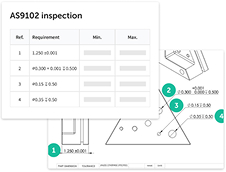
An effective FAI is not simply a final measurement. It connects the drawing characteristics to the inspection results and identifies the production configuration used to create the part. Depending on customer requirements, the package may include a ballooned drawing, dimensional results, material records, finish information and relevant certificates.
Using CMM for complex dimensional verification
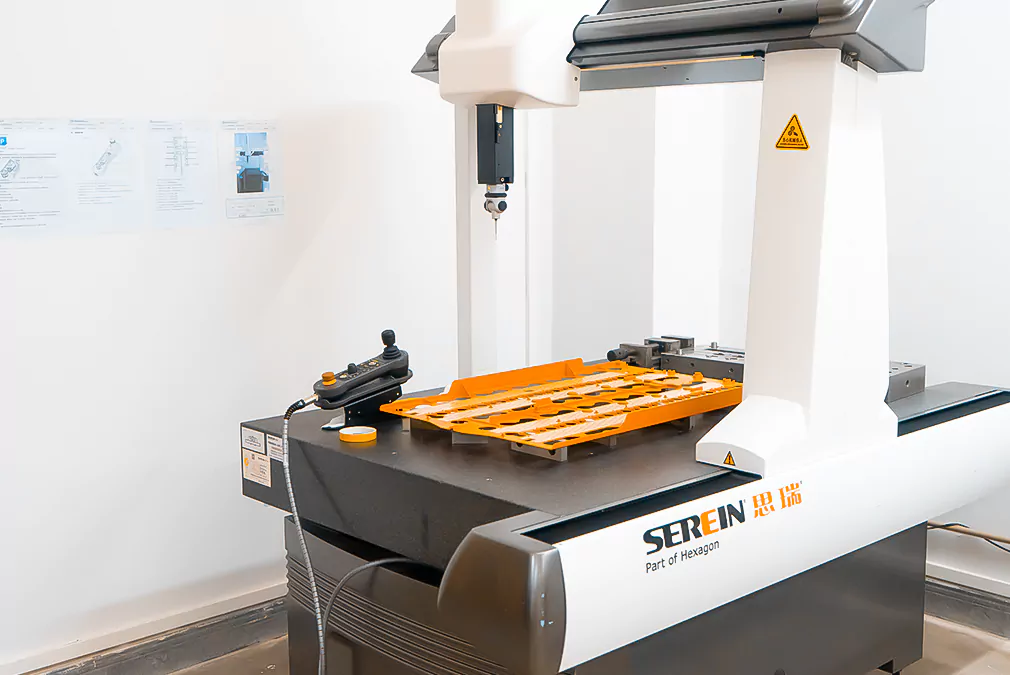
A coordinate measuring machine is valuable when a part contains multiple datum relationships, true-position requirements, profiles or features that are difficult to verify with conventional gauges alone. TDB Tech uses CMM inspection together with appropriate calibrated equipment according to the feature and required uncertainty.
CMM programming must reflect the drawing intent. Datum establishment, probing strategy, fixturing, temperature and reporting method all affect the value of the result. For a tolerance as tight as ±0.005 mm, the manufacturing and inspection teams must confirm that the feature geometry and measurement method can support a reliable decision.
Mill Certificate 3.1 and material traceability
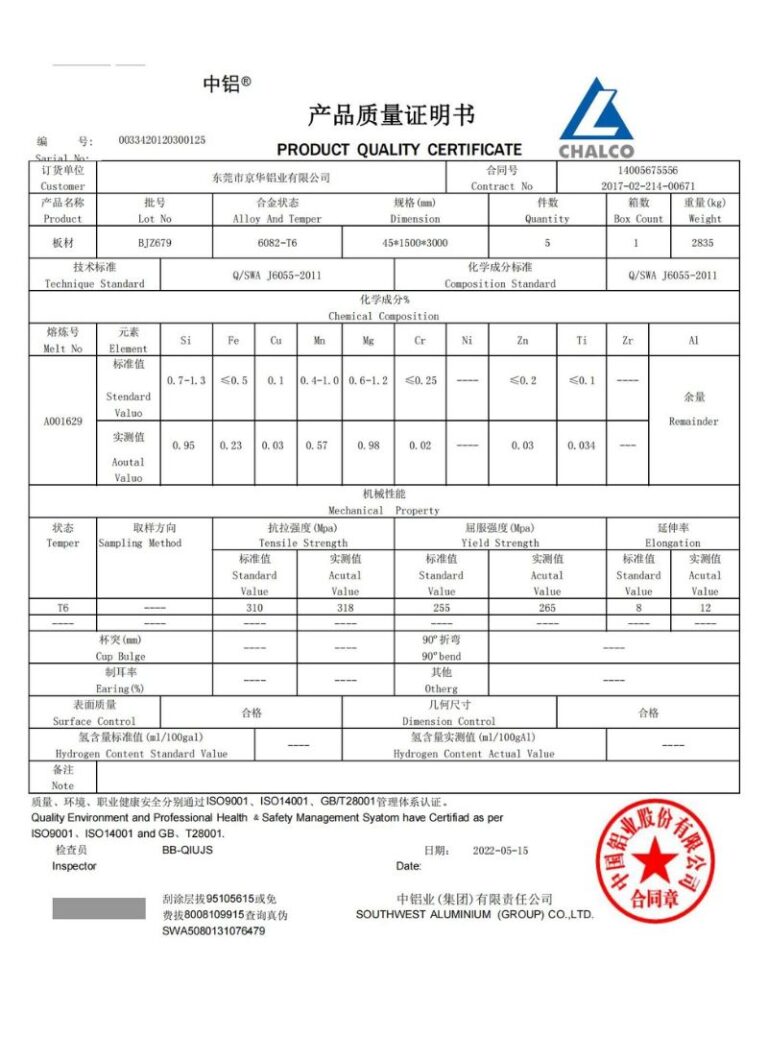
For many European supply chains, EN 10204 Type 3.1 documentation is requested for metallic materials, particularly steels and stainless steels. The document is issued by the material manufacturer and provides specific inspection results with validation independent of the manufacturing department. For aluminum and other alloys, buyers may request an appropriate mill certificate or material test report linked to the supplied lot.
TDB Tech asks customers to specify the exact document standard during RFQ. This prevents ambiguity between a generic certificate of conformity and a lot-specific material certificate. Incoming Quality Control verifies the supplied material and maintains the required traceability into production.
IQC, IPQC and OQC as one connected system
Incoming Quality Control checks material and purchase documentation. In-Process Quality Control verifies critical characteristics while corrective action is still practical. Outgoing Quality Control reviews completed parts, appearance, quantity, packaging and required records before shipment. Together these stages reduce the risk of discovering a problem only after the order reaches the customer.
TDB Tech was founded in 2015 by Vietnamese engineers and operates two facilities in Hanoi with more than 2,500 square meters of combined production space. The company supports precision CNC milling, CNC turning, Swiss-type machining, finishing coordination, assembly and export delivery for customers in the United States and Europe.
For an RFQ, identify the required FAI format, CMM report, sampling plan and material certificate on the drawing or purchase specification. TDB Tech can then include the correct quality deliverables in its quotation and production plan.
Work with TDB Tech Vietnam
Effective CNC quality control for export parts connects drawings, process checks and shipment records. TDB Tech applies CNC quality control for export parts from incoming material verification through FAI, CMM reporting and outgoing inspection.
Explore our precision CNC machining services, review the TDB quality assurance process, or request a manufacturing quote. For additional industry context, see this authoritative reference.