How to Qualify a Second-Source CNC Supplier in Vietnam
A second-source CNC supplier is not simply another company capable of producing a similar-looking component.
A true second source should be capable of manufacturing the approved component to the required technical and quality requirements when your supply strategy needs additional capacity or diversification.
For US procurement teams evaluating Vietnam, qualification should be systematic.
Why Develop a Second CNC Source?
Potential objectives include:
- Supply continuity
- Additional capacity
- Geographic diversification
- Reduced single-supplier dependency
- Competitive benchmarking
- Production flexibility
The objective should be defined before the qualification project begins.
Step 1 — Select Candidate Parts
Begin with stable components.
Look for:
- Approved drawings
- Known material
- Established quality requirements
- Historical production data
- Defined annual demand
This gives the new supplier a clear technical baseline.
Step 2 — Establish Equivalent Requirements
Both existing and prospective suppliers should work from equivalent specifications.
Provide:
- Same drawing revision
- Same material
- Same tolerances
- Same finishing requirements
- Same inspection requirements
- Same documentation expectations
Otherwise, price and quality comparisons may not be meaningful.
Step 3 — Technical Review
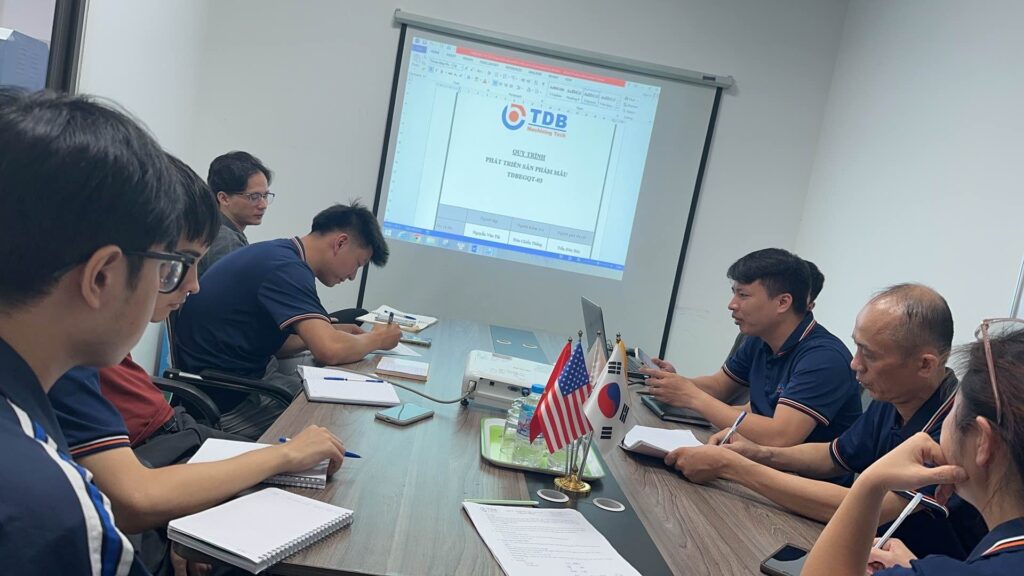
Ask the prospective supplier to review the drawing before production.
Discuss:
- Manufacturing route
- Critical characteristics
- Workholding
- Material
- Secondary processes
- Inspection
- Potential manufacturing risks
Step 4 — Trial Production
Produce an appropriate qualification quantity.
Evaluate the actual parts rather than relying solely on supplier claims.
Step 5 — Compare Inspection Results
Review:
- Critical dimensions
- Geometric requirements
- Surface requirements
- Material documentation
- Required inspection records
Any differences should be understood before approval.
Step 6 — Evaluate Packaging & Delivery
A technically conforming component can still fail as a supply solution if packaging or delivery is unreliable.
Evaluate:
- Part protection
- Identification
- Documentation
- Shipping
- Delivery performance
Step 7 — Verify Repeatability
Where the sourcing program justifies it, evaluate more than one batch.
A second source should demonstrate that acceptable results can be repeated.
Second Source Does Not Mean Immediate Transfer
After qualification, the buyer can determine the appropriate sourcing allocation.
Possible models include:
Primary Supplier + Backup Supplier
or:
Dual-Source Production
or:
Part-Family Allocation
The appropriate model depends on the buyer’s supply-chain strategy.
Evaluate TDB Hanoi as a Second CNC Source
TDB Hanoi can review candidate CNC components for buyers developing additional manufacturing capacity in Vietnam.
Start with actual parts rather than broad sourcing assumptions.
Send:
Drawings · Current Material · Quantity · Annual Demand · Quality Requirements · Existing Inspection Requirements · Destination
CTA: Evaluate Candidate Parts
Internal Links: China+1 → Capabilities → Quality Assurance → Services → RFQ