CNC Turning vs Automated CNC Lathe: Which Process Should You Choose?
CNC turning and automated CNC lathe machining are both widely used to manufacture rotational precision components, but they are not always suited to the same parts or production requirements.
For engineers and procurement teams, choosing the appropriate process can influence part quality, production efficiency, cycle time, and manufacturing cost.
The right decision should therefore be based on the part geometry, dimensions, material, tolerances, feature complexity, production quantity, and inspection requirements rather than simply choosing one machine type over another.
This guide explains the practical differences between CNC turning and automated CNC lathe machining and how buyers can determine which process is more appropriate for their components.
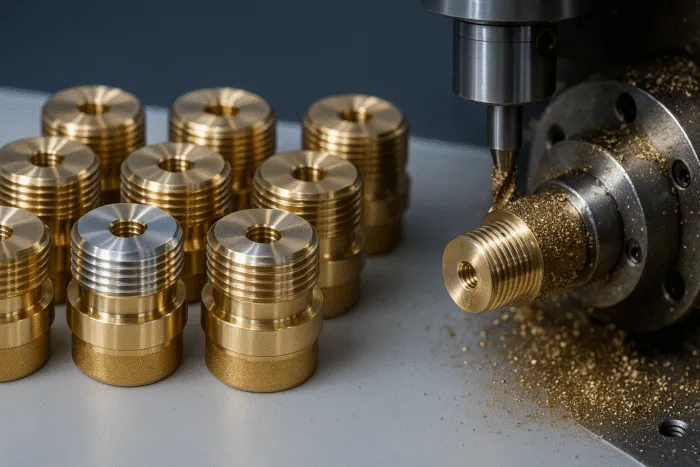
[IMAGE 1 – CNC Turning vs Automated CNC Lathe Comparison]
What Is CNC Turning?
CNC turning is a machining process in which the workpiece rotates while cutting tools remove material to create the required geometry.
It is particularly suitable for components containing rotational features such as:
- Shafts
- Bushings
- Sleeves
- Pins
- Spacers
- Fittings
- Threaded components
- Cylindrical housings
- Flanges
Depending on the machine and component design, turning operations can produce external and internal diameters, faces, grooves, threads, tapers, bores, and other rotational features.
Learn more about CNC Turning Services at TDB Hanoi.
What Is an Automated CNC Lathe?
An automated CNC lathe is designed to machine turned components with a high degree of automated production, making it particularly useful for repeat production of small and precision components.
Depending on the machine configuration, multiple operations may be performed during the machining cycle.
For appropriate component geometries, this can reduce manual handling between operations and support consistent repeat production.
At TDB Hanoi, automated CNC lathe capability complements conventional CNC turning as part of our broader precision machining capacity.
Learn more about our Automated CNC Lathe Services.
CNC Turning vs Automated CNC Lathe: What’s the Main Difference?
The practical difference is not simply that one process is “better” than the other.
They are optimized for different manufacturing situations.
CNC turning provides a versatile solution for a broad range of rotational components.
Automated CNC lathe machining can be particularly effective when the component geometry and production quantity make automated repeat machining advantageous.
A simplified comparison is:
| Factor | CNC Turning | Automated CNC Lathe |
|---|---|---|
| Typical Geometry | Rotational components | Small and precision turned components |
| Part Size | Broad range depending on machine | Often optimized for smaller parts |
| Feature Complexity | Standard to complex turning features | Multiple precision turned features |
| Production | Prototype to repeat production | Particularly suitable for repeat production |
| Automation | CNC-controlled machining | Higher level of automated production |
| Best Selection | Depends on drawing and project | Depends on geometry and production requirements |
The actual process should always be selected after reviewing the engineering drawing.
When Should You Choose CNC Turning?
CNC turning may be appropriate when a component is primarily rotational and contains features such as:
- External diameters
- Internal diameters
- Shoulders
- Grooves
- Threads
- Bores
- Tapers
- Faces
It is also useful when production requirements involve prototypes, low-volume orders, or repeat production where standard CNC turning provides an efficient manufacturing route.
Part size and geometry are important factors.
A component that is physically larger or does not match the working range of an automated lathe may naturally be better suited to another turning machine.
When Should You Consider an Automated CNC Lathe?
Automated CNC lathe machining can become attractive when the project contains:
- Small precision turned components
- Repeat production
- Multiple turned features
- High part quantities
- Consistent recurring orders
- Components suited to automated bar-fed production
- Requirements where reducing handling between operations improves efficiency
The benefit becomes particularly relevant when the component is manufactured repeatedly.
For repeat-production programs, cycle efficiency multiplied across thousands of components can have a meaningful impact on total manufacturing cost.
Part Geometry Should Determine the Process
The first question should not be:
“Which machine is better?”
It should be:
“Which manufacturing process best fits this part?”
Consider a simple large cylindrical housing.
Standard CNC turning may be the natural manufacturing choice.
Now consider a small precision component containing several diameters, grooves, threads, and other detailed turned features that will be manufactured repeatedly.
An automated CNC lathe may provide a more efficient production route.
The drawing should drive the decision.
Our CNC Machining Drawing Requirements guide explains what engineers should communicate before manufacturing begins.
How Part Size Influences Process Selection
Part dimensions are one of the first factors a manufacturer evaluates.
Machine selection can depend on:
- Material diameter
- Overall part length
- Finished diameter
- Feature location
- Required tool access
- Workholding
- Raw material format
Automated CNC lathes are often associated with smaller components, while conventional CNC turning can accommodate a broader variety of rotational parts depending on the machine configuration.
However, there is no universal diameter or length at which one process automatically becomes the correct choice.
The manufacturer’s actual machine capability and the component drawing must be reviewed together.
Feature Complexity
A turned component may look simple at first glance but contain many manufacturing requirements.
For example:
Outside Diameter → Internal Bore → Groove → Thread → Cross Feature → Surface Requirement → Inspection Requirement
The number and relationship of these features can influence the most efficient production method.
When several operations can be integrated into an automated machining cycle, unnecessary part handling may be reduced.
But if a component requires extensive prismatic machining, complex pockets, or large flat surfaces, additional CNC milling may still be required.
Read our CNC Milling vs Turning guide to understand the difference between these fundamental machining processes.
Production Volume Matters
Production quantity can significantly influence process selection.
A process that makes sense for 20 components may not be the most efficient method for 20,000 components.
For lower quantities, manufacturers often focus on:
- Setup efficiency
- Flexible workholding
- Programming time
- Minimum tooling requirements
For repeat production, additional factors become increasingly important:
- Cycle time
- Automated material feeding
- Process repeatability
- Tool life
- Inspection frequency
- Production planning
This is why TDB Hanoi reviews quantity and expected repeat demand together with the drawing during quotation.
CNC Turning vs Automated CNC Lathe for Repeat Production
Repeat production changes the economics of CNC machining.
Once a manufacturing process has been developed and validated, recurring orders can benefit from established:
- CNC programs
- Tooling strategy
- Workholding
- Inspection plans
- Process knowledge
- Production documentation
Automated CNC lathe machining can be particularly valuable for appropriate small turned components produced repeatedly.
TDB Hanoi supports customers from initial orders through ongoing repeat production.
How Tolerances Affect the Decision
Tolerance requirements are important, but process selection should not be reduced to a claim that one machine type is automatically “more accurate.”
Manufacturing capability depends on many factors, including:
- Component geometry
- Material
- Feature size
- Tooling
- Workholding
- Machine condition
- Process planning
- Measurement method
The correct question is:
Can the proposed manufacturing process consistently meet the drawing requirements?
For demanding components, engineers should identify critical dimensions and geometric requirements clearly.
Read our Tight Tolerance CNC Machining Guide.
GD&T for Turned Components
Turned components may contain GD&T requirements such as:
- Circularity
- Cylindricity
- Perpendicularity
- Position
- Profile
- Runout
These requirements can influence machining setup and inspection strategy.
For example, a shaft may contain several diameters that must maintain a defined geometric relationship to a datum axis.
The manufacturing process therefore needs to consider more than individual diameter tolerances.
Read our GD&T for CNC Machined Parts guide for more information.
Material Selection
Both CNC turning and automated CNC lathe machining can be applied to different engineering materials depending on the project and machine capability.
Material affects:
- Cutting parameters
- Tool selection
- Tool wear
- Surface finish
- Chip control
- Cycle time
- Dimensional behavior
For repeat production, these effects become especially important because even small improvements in process stability can accumulate across many components.
Explore the materials supported by TDB Hanoi on our CNC Machining Materials page.
Surface Finish Requirements
Surface requirements should also be communicated during quotation.
A turned component may contain:
- Functional bearing surfaces
- Sealing surfaces
- Cosmetic surfaces
- Threaded surfaces
- Mating diameters
Each may require different manufacturing considerations.
Surface finish requirements should therefore be defined according to component function rather than automatically applying the same requirement to every surface.
See our CNC Machining Surface Finishes guide.
Inspection of Precision Turned Parts
Inspection planning should be based on the engineering drawing and agreed quality requirements.
Depending on the component, inspection may include verification of:
- Diameters
- Lengths
- Threads
- Grooves
- Hole dimensions
- Geometric relationships
- Surface requirements
- Critical characteristics
For repeat-production projects, buyers should communicate required inspection records and documentation before manufacturing begins.
Learn more about CNC Machining Quality Assurance at TDB Hanoi.
Which Process Is More Cost-Effective?
Neither process is automatically cheaper.
Cost depends on the complete manufacturing situation.
Important factors include:
- Material
- Part geometry
- Dimensions
- Tolerances
- Number of features
- Setup requirements
- Tooling
- Cycle time
- Production quantity
- Inspection
- Secondary operations
For a small repeat-production component, automated machining may reduce per-part processing effort.
For another component, conventional CNC turning may provide the more efficient solution.
The correct comparison should therefore be based on the total manufacturing process, not simply the hourly machine rate.
For broader cost considerations, read How to Reduce CNC Machining Cost.
CNC Turning vs Automated CNC Lathe: Quick Selection Guide
Choose CNC Turning when the project involves:
- A broad range of rotational components
- Larger or varied turned geometries
- Prototype or low-volume requirements
- Standard turning operations
- Components suited to conventional CNC turning
Consider Automated CNC Lathe machining when the project involves:
- Small precision turned parts
- Repeat production
- Larger production quantities
- Multiple turned features
- Components well suited to automated machining
However, these are guidelines rather than absolute rules.
The final process should be selected after engineering review of the actual component.
What Should You Send for Quotation?
To determine the appropriate manufacturing process, send the supplier:
- 2D engineering drawing
- 3D CAD model where available
- Material and grade
- Quantity
- Annual forecast for repeat programs
- Tolerances
- GD&T requirements
- Surface requirements
- Secondary processes
- Inspection requirements
- Documentation requirements
The more complete the RFQ, the easier it becomes to evaluate the appropriate process.
See our CNC Machining RFQ Vietnam Guide for a complete checklist.
CNC Turning and Automated CNC Lathe Capabilities at TDB Hanoi
TDB Hanoi supports precision CNC manufacturing for global customers requiring prototypes, low-volume orders, and repeat production.
Our manufacturing operations include:
- CNC Milling
- CNC Turning
- Automated CNC Lathe
- Contract Manufacturing
- Turnkey Manufacturing
TDB Hanoi currently operates 50+ CNC machines with production capacity of up to 200,000 parts per month across our manufacturing operations.
Rather than selecting a process based only on a machine name, our team reviews the customer’s:
Drawing → Material → Geometry → Tolerances → Quantity → Inspection Requirements
to determine an appropriate manufacturing approach.
Explore our complete CNC Machining Services.
Frequently Asked Questions
What is the difference between CNC turning and an automated CNC lathe?
CNC turning is a broad machining process for rotational components. Automated CNC lathes are configured to perform turned-part production with a higher degree of automation and can be particularly effective for appropriate small precision components and repeat-production programs.
Is an automated CNC lathe the same as CNC turning?
Automated CNC lathe machining is part of the broader turning family, but machine configuration, automation, material feeding, tooling, and suitable component geometry can differ from conventional CNC turning.
Which process is better for small precision parts?
For appropriate small components manufactured repeatedly, an automated CNC lathe may provide an efficient production route. The actual choice depends on geometry, dimensions, tolerances, material, quantity, and machine capability.
Which process is better for large turned parts?
Larger rotational components may be more suitable for conventional CNC turning depending on their dimensions and the available machine working range.
Is an automated CNC lathe cheaper than CNC turning?
Not automatically. Manufacturing cost depends on setup, cycle time, material, geometry, quantity, tooling, inspection, and other project requirements.
Can turned parts also require CNC milling?
Yes. Components containing holes, flats, slots, pockets, or other non-rotational features may require additional milling depending on the available machine configuration and component design.
What information does TDB Hanoi need to choose the process?
Send the latest drawing, CAD model where available, material, quantity, tolerances, GD&T, surface requirements, inspection requirements, and expected repeat demand.
Send Your Turned Part Drawing to TDB Hanoi
Not sure whether your component should use CNC turning or automated CNC lathe machining?
Send TDB Hanoi your:
2D Drawing · 3D CAD · Material · Quantity · Annual Forecast · Tolerances · GD&T · Surface Requirements
Our engineering team can review the component requirements before quotation and determine an appropriate manufacturing approach.