Verify a CNC manufacturer in Vietnam by connecting its legal identity, actual production site and part-specific manufacturing evidence. A professional website, an ISO certificate or a list of export markets can support an initial review, but approval should depend on the evidence relevant to your order.
A useful qualification process moves from identity checks to technical review, then to an audit or trial with clear acceptance criteria. Record open requirements rather than assuming that a broad capability claim resolves them.
1. Define the order you want the supplier to support
Choose a representative drawing before contacting factories. Include the material and condition, critical features, quantities, surface requirements, inspection records and delivery destination. If your annual demand is a forecast rather than a commitment, identify it as such.
This gives every candidate the same basis for review. It also reveals whether the supplier asks useful questions about tolerances, stock size, measurement or outside processing. Use the CNC RFQ checklist to prepare the package.
2. Match the commercial identity to the manufacturing site
Request the legal company name, enterprise registration number, registered address and actual manufacturing address. Confirm which entity will quote, sign the order, issue the invoice and receive payment. A registered office and a factory may have different addresses; ask for an explanation and supporting details.
The National Business Registration Portal provides access to company registration information. Registration is an identity check, not proof that the company owns particular machines or has completed export orders.
Where a sourcing agent or trading company is involved, establish its role and identify who manufactures the component. Agree the buyer’s access to manufacturing and quality evidence through the chosen commercial arrangement.
3. Check whether the proposed manufacturing route is real
Ask the supplier to explain the route for your drawing, including the stock form, main setups, required processes and inspection approach. Separate in-house work from subcontracting. A factory does not need to perform every process internally, but the responsibility for outside work should be clear.
For a remote review, request a scheduled video conversation with the relevant engineering and quality staff. A live walk-through can show selected equipment and workflow, subject to customer confidentiality and safety. For a strategic program, follow with a factory visit and audit agenda.
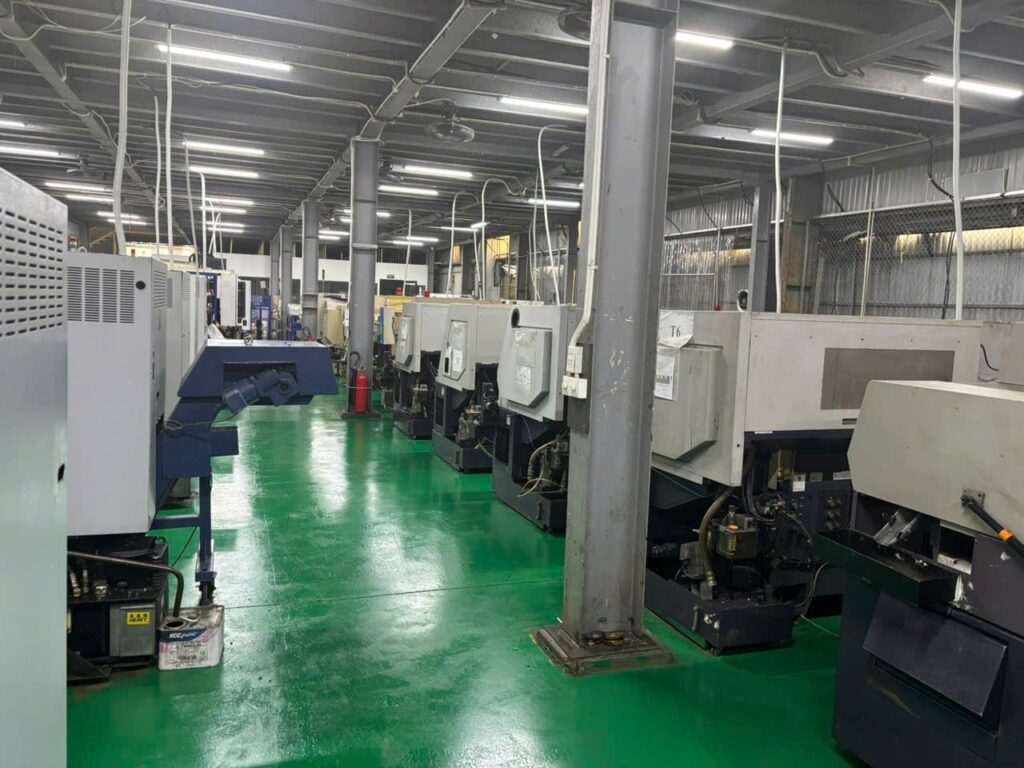
Relevant evidence is more useful than a total machine count. Ask which equipment is suitable for the part’s dimensions, material and critical features, and how it will be scheduled and supported.
4. Verify certificates and inspection capability separately
For a management-system certificate, check the company name, site, scope, standard edition, certificate number, dates and status with the issuing certification body. If accreditation is claimed, verify the relevant accreditation separately. ISO explains that it develops standards and does not itself certify organizations: see ISO’s certification guidance.
Then ask how the supplier will verify your drawing. A certificate does not replace a suitable inspection method or a record for the actual production lot. Review a shareable inspection example and agree the critical characteristics, sampling and required delivery records using the quality-control guide.
5. Evaluate export experience with appropriate evidence
“We export worldwide” should lead to specific questions: what kinds of components, which destinations, what shipment responsibilities and what documents? Ask about experience relevant to your order without requesting another customer’s confidential designs or prices.
| Evidence | What it can help establish | What it does not prove alone |
|---|---|---|
| An anonymized case study with permitted images | The part type, manufacturing challenge and supplier’s role. | The identity of an undisclosed customer or performance on your component. |
| A redacted shipment or export record | Experience handling a shipment, where enough context remains to understand the record. | Current production capacity, approval for your application or preferred tariff treatment. |
| A permitted sample inspection report | How results, revisions and acceptance are recorded. | That every shipment receives the same inspection or that your specified method is available. |
| A customer reference with consent | A third party’s experience of a relevant relationship. | A guarantee of future performance or permission to use that customer’s logo. |
Assess records together. A supplier may reasonably protect names, prices and drawings. It should still be able to explain its own role and propose another suitable way to demonstrate the claimed experience.
6. Use a scorecard, with mandatory approval gates
The following weights are an example buyer tool, not a recognized certification scheme. Adjust them to your project. Score each category from 0 to 4: no evidence, assertion only, partial evidence, relevant evidence reviewed, and evidence verified against the agreed requirement. Calculate weighted points as rating ÷ 4 × weight.
| Category | Example weight | Evidence to review |
|---|---|---|
| Drawing and process fit | 20 | Route, technical questions and relevant equipment. |
| Inspection and quality control | 20 | Methods for critical features, records and release responsibility. |
| Material and outside-process control | 20 | Specification, source route, certificates and subcontracting control. |
| Planning and repeat-order readiness | 15 | Material dependencies, production allocation and change management. |
| Engineering communication | 10 | Clear answers, revision awareness and documented decisions. |
| Comparable commercial scope | 10 | NRE, recurring price, inspection, packaging and delivery assumptions. |
| Relevant export/document handling | 5 | Appropriate shipment experience and document examples. |
A score cannot override a mandatory requirement. Leave approval open if the contracting identity is unresolved, a critical feature cannot be verified, a required material is unconfirmed or confidentiality arrangements are unacceptable. Assign an owner and due date to each open item.
7. Confirm the commercial route and release a controlled trial
Check that the quotation, contract and payment instructions refer to the agreed entity. If a different payee is proposed, obtain and verify the explanation before proceeding. Confirm any change of bank details through an established contact channel.
Use the quotation comparison checklist to align scope. Then define a trial with an approved revision, material, quantity, required records and acceptance criteria. The prototype-to-series guide explains why a successful sample and readiness for repeat production are separate decisions.
Apply the same qualification process to TDB Hanoi. Request a response against your actual drawing, review the relevant evidence and agree the next qualification step before committing to production volumes.
8. Request one structured supplier evidence pack
Instead of collecting disconnected brochures, send a short register that links each qualification question to the evidence needed and the buyer’s acceptance decision. Start with one representative component so the supplier can respond against a real manufacturing and inspection requirement.
The US International Trade Administration’s due-diligence guidance supports checking a prospective partner’s suitability. The register below is an editorial buyer tool, not an official certification scheme or a claim that TDB has published every listed record.
| Evidence-pack item | Buyer question | Review boundary |
|---|---|---|
| Identity and contracting route | Who operates the site, accepts the order and receives payment? | Match current entity and role; registration alone does not prove capability. |
| Dated factory/process evidence | Where and by whom will the part be manufactured? | Map actual in-house and external operations; respect filming restrictions. |
| Drawing-specific technical response | What route and difficult features has the supplier identified? | Connect stock, setups and external processes to the actual drawing. |
| Shareable inspection example | Can the supplier show how requirements and results are recorded? | Confirm the example’s scope; it is not evidence about your unmade parts. |
| Material/lot relationship | How does stock identity remain connected to the job and shipment? | Review the agreed link through cutting, machining and delivery. |
| Permitted case or reference | What relevant work can be demonstrated without breaching confidentiality? | Identify the supplier’s role; do not infer undisclosed customers or endorsements. |
| Trial and release plan | Who decides the next step and on what evidence? | Specify revision, scope, acceptance and open-action ownership. |
9. Check the internal consistency of sample records
On an inspection example, compare part and revision references, characteristic identifiers, units, limits, actual results, method and sample or lot identity. Ask which characteristics were covered and how the drawing’s datum requirements were interpreted. A page full of passing values is not informative if the measured item and requirement are unclear.
NIST’s traceability guidance explains that traceability concerns measurement results; calibration alone does not validate every measurement. Ask for the explanation and evidence appropriate to the critical features, rather than treating a photograph of a measuring machine as a complete capability assessment.
A valid example can be redacted. Accept removal of customer names, prices and proprietary geometry when enough context remains to understand the supplier’s process and role. If the record becomes impossible to interpret, agree another suitable form of evidence instead of demanding confidential information.
10. Keep claims, evidence and decisions separate
Give each request a status: requested, received, reviewed or verified against the stated requirement. Record the evidence reference, issue date, reviewer, gap and action deadline. These statuses describe your review progress; they are not public supplier ratings or substitutes for mandatory approval gates.
For example, “CMM report received” means a document arrived. “Reviewed” means the buyer checked its scope. “Verified for the trial” requires the responsible team to establish that the agreed evidence supports that particular decision. Do not turn one successful review into a guarantee for all future parts.
Close identity, critical technical and contractual requirements before their relevant release point. An attractive weighted score cannot compensate for an unresolved material requirement or an inspection method that cannot verify a critical feature.
11. Connect the evidence pack to destination and order scope
A Canadian first order may require an origin-information discussion with the importer. An EU program may include a specific substance-declaration request or a separate CBAM screening question. Treat these as scoped requirements, not as proof that a supplier needs every certificate mentioned on the internet.
Use the quote-comparison worksheet to confirm whether the agreed inspection, documentation and trial activities are priced. Then carry unresolved items into the approval plan with named contacts. Apply the same evidence standard to TDB Hanoi and any alternative manufacturer.
Frequently asked questions
How can I distinguish a factory from a trading company?
Ask who performs each operation, where production occurs and which legal entity accepts the order. Confirm the explanation with appropriate factory and process evidence.
Is ISO 9001 enough to approve a CNC supplier?
No. Verify the certificate and scope, then evaluate material control, inspection, technical fit and trial results for your component.
Can I check export experience without seeing customer names?
Often an anonymized case, redacted record or permitted reference can support a review. Agree what evidence is adequate while respecting confidentiality.
Does a supplier need a perfect score before a trial?
The buyer should set the decision criteria. Open noncritical items may have agreed actions, but mandatory technical, identity and contractual requirements must be resolved before the relevant release.
Evaluate TDB against your qualification requirements
Send one representative drawing and your supplier checklist. Identify the process, inspection and documentation evidence you want to review.
Part 2 of our international buyer guide. Return to Precision CNC Machining in Vietnam.