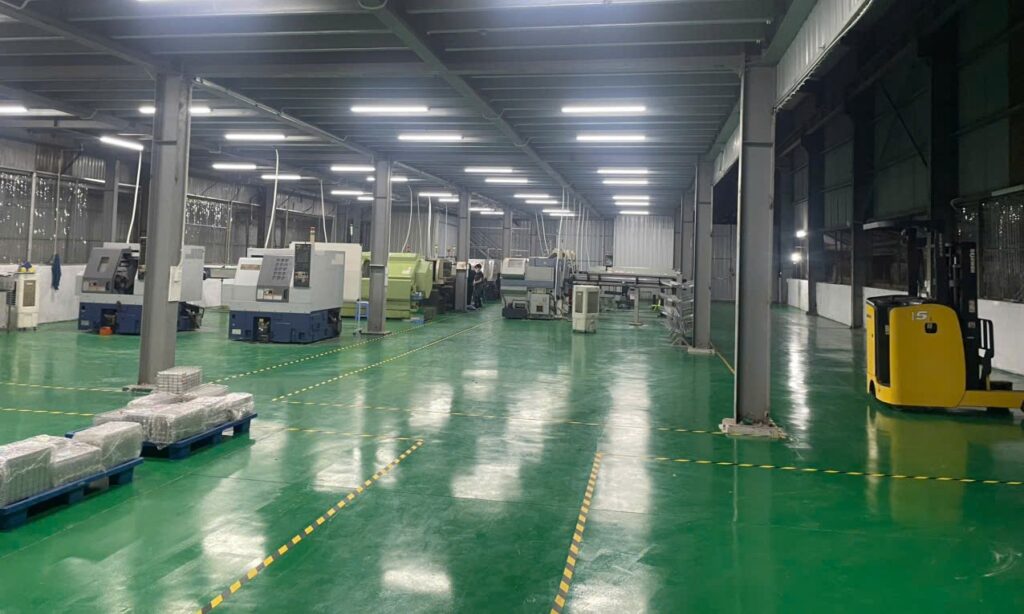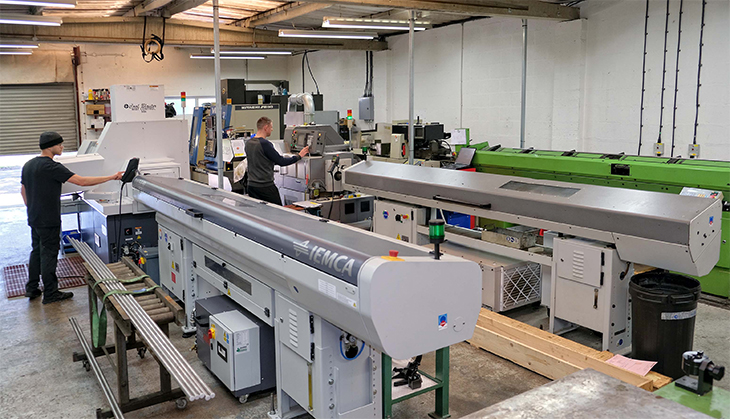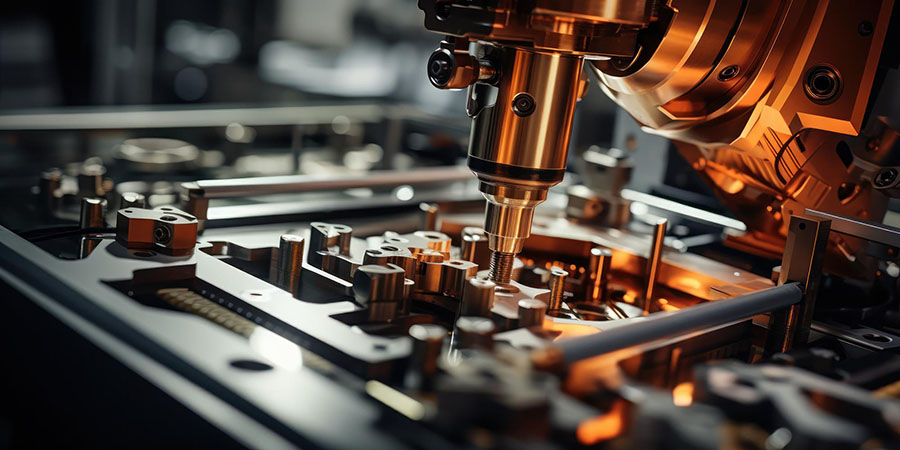
What is CNC Machine Shop Work?
In the modern industrial era, CNC (Computer Numerical Control) machining serves as the backbone of global manufacturing. But what exactly happens inside a CNC machine shop? It is far more than just “cutting metal”; it is a sophisticated blend of engineering logic, advanced software, and the art of material transformation.
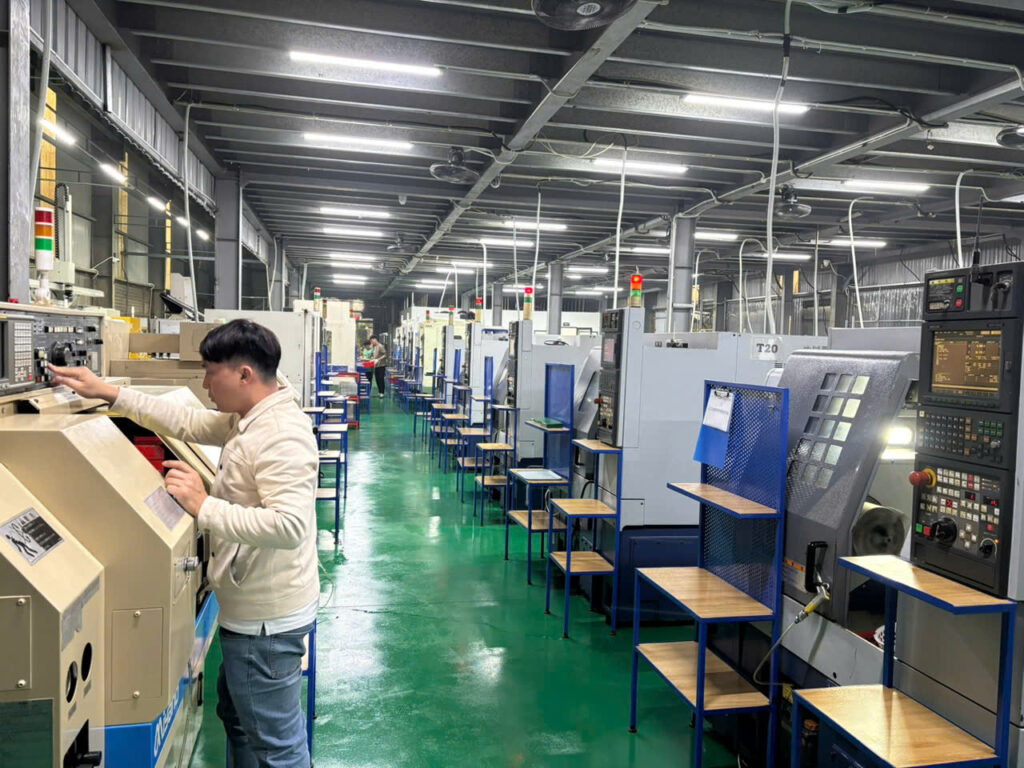
1. Defining CNC Machine Shop Work
CNC Machining is a subtractive manufacturing process that uses computerized controls and rotating multi-point cutting tools to remove material from a workpiece. Whether it is metal, plastic, or composite, the machine follows a programmed code to create a highly precise part.
Unlike traditional manual machining, CNC machines (Mills, Lathes, Routers, and Lasers) operate via numerical strings known as G-code and M-code. This allows for the production of complex geometries that would be physically impossible to achieve consistently by hand.
2. The 5-Step Workflow in a 2026 Smart Shop
To turn a raw block of material into a finished aerospace component or medical implant, a professional shop follows a structured digital-to-physical pipeline:
| Step | Key Activity | 2026 Innovation |
| 1. Design (CAD) | Creating a 3D digital model of the part. | Generative AI optimizes the design for weight and strength. |
| 2. Programming (CAM) | Converting the 3D model into machine instructions. | Cloud-Native CAM allows for real-time collaborative coding. |
| 3. Machine Setup | Loading tools, fixtures, and raw material (workholding). | Cobots (Collaborative Robots) assist in loading heavy parts. |
| 4. Machining | The machine executes the cutting paths. | IoT Sensors monitor tool wear and vibration in real-time. |
| 5. Quality Control (QC) | Verifying dimensions against the original design. | Digital Twins compare the physical part to the 3D model instantly. |
3. Why CNC is Essential
Modern industry relies on CNC for three primary reasons:
-
Extreme Precision: Modern machines can hold tolerances as tight as $\pm 0.005$ mm (5 microns).
-
High Repeatability: Whether you need 10 parts or 10,000, the first part is identical to the last.
-
Complex Geometries: Multi-axis machines (4-axis and 5-axis) can carve intricate internal features and organic shapes.
4. Industry Spotlight: TDB Hanoi Vietnam
As a premier example of Vietnam’s growing precision engineering sector, TDB Hanoi represents the new standard for regional machine shops.
About TDB Hanoi:
Founded in 2015 and based in the Hanoi region, TDB Hanoi has evolved from a local workshop into a global supplier. Utilizing high-end Japanese machinery (such as Moriseiki and Miyano), they specialize in high-precision components for the semiconductor, medical, and electronics industries. Their reputation is built on the synergy of skilled Vietnamese craftsmanship and rigorous ISO-certified quality management.
5. Common Materials in the CNC Machine Shop
A versatile shop must master various materials, each requiring unique cutting speeds and tool types:
-
Aluminum (e.g., 6061, 7075): Lightweight and easy to machine; the gold standard for aerospace and robotics.
-
Stainless Steel (e.g., 304, 316): Strong and corrosion-resistant; used for medical tools and food-grade equipment.
-
Titanium: High strength-to-weight ratio; critical for orthopedic implants.
-
Engineering Plastics (PEEK, POM, PC): Used when low friction or electrical insulation is required.
6. The 2026 Edge: Future Trends
The CNC landscape is shifting toward “Intelligence over Mechanics”:
-
Green Machining: Shops are moving toward Net-Zero goals by recycling 100% of metal chips and using biodegradable coolants.
-
Hybrid Manufacturing: The integration of Additive (3D printing) and Subtractive (CNC) technologies in a single machine to create complex, hollow internal structures.
-
Predictive Maintenance: AI algorithms now predict spindle or bearing failure before it happens, ensuring the shop operates 24/7 without unplanned downtime.
Conclusion
CNC Machine Shop work is where digital precision meets physical reality. It is a field that requires constant learning and adaptation to new software and materials. If you are looking to manufacture a product that requires durability and high accuracy, CNC is the definitive solution.
CNC Machining Request for Quote (RFQ)
To: Sales/Estimating Department
From: [Your Name/Company Name]
Date: [Current Date]
Subject: RFQ for Precision CNC Machining – Project [Project Name/Code]
1. Project Overview
-
Project Name: [e.g., High-Pressure Valve Housing]
-
Target Delivery Date: [e.g., May 15, 2026]
-
Application Industry: [e.g., Medical, Aerospace, Electronics]
2. Technical Specifications
Please provide pricing based on the following details for each part:
| Part Name / ID | Material | Quantity | Tolerances | Surface Finish |
| Part A-001 | [e.g., AL 6061-T6] | [e.g., 50 units] | $\pm 0.01$ mm | [e.g., Anodized Black] |
| Part B-002 | [e.g., SUS 316] | [e.g., 10 units] | $\pm 0.05$ mm | [e.g., Bead Blast] |
3. Documentation Attached
-
3.1 3D Models: [e.g., Attached STEP or IGES files for geometry]
-
3.2 2D Drawings: [e.g., Attached PDF drawings for tolerances, threads, and critical dimensions]
4. Quality & Compliance
Please confirm if you can meet the following requirements:
-
Certification: [e.g., ISO 9001:2015 / AS9100]
-
Inspection Report: [e.g., FAI (First Article Inspection) required?]
-
Material Certification: [e.g., Mill Test Report (MTR) required?]
5. Shipping & Logistics
-
Shipping Method: [e.g., EXW, FOB, or DDP]
-
Delivery Address: [Your City/Country]
6. Response Requested By
Please provide your quotation by [Date]. Include lead time, unit price, and any non-recurring engineering (NRE) or tooling costs.
💡 Pro-Tips for the Best Results
To ensure the machine shop gives you the most competitive price, keep these 2026 industry standards in mind:
-
-
The “Golden Pair” of Files: Always send both a STEP file (for the machine to read) and a PDF drawing (for the human to see tolerances and threads). Sending only one often leads to questions and delays.
-
Tolerances Cost Money: Only specify tight tolerances (e.g., $\pm 0.005$ mm) where absolutely necessary. The tighter the tolerance, the higher the price.
-
Material Substitutions: If your project allows for it, add a note saying “Equivalent materials accepted” (e.g., Al 6061 instead of 6063). This allows the shop to use what they have in stock, lowering your cost.
-
Threads & Holes: Clearly mark which holes are tapped (threaded). 3D models often don’t show thread pitch, so the 2D PDF is crucial here.
-
Related subject
What is CNC Machine Shop Work?
Why Choose a CNC Machine Shop for Your Manufacturing Needs?
6 Factors To Consider To Choose A CNC Machine Shop
Key Questions to Ask When Choosing a CNC Machine Shop Near Me
Related Categories: CNC Manufacturing