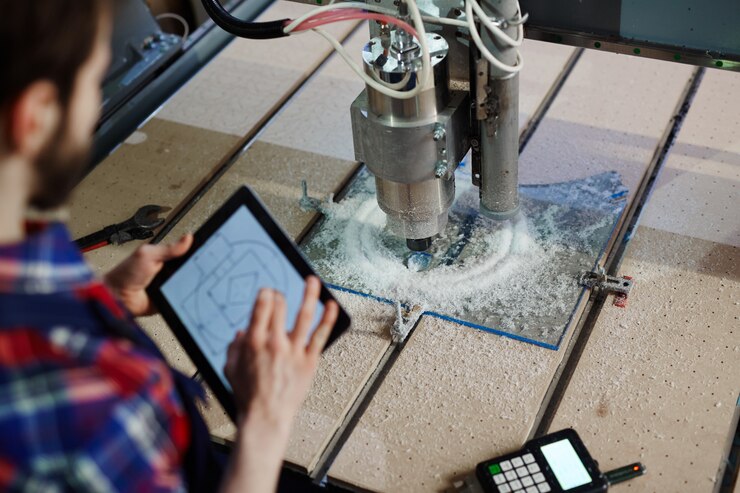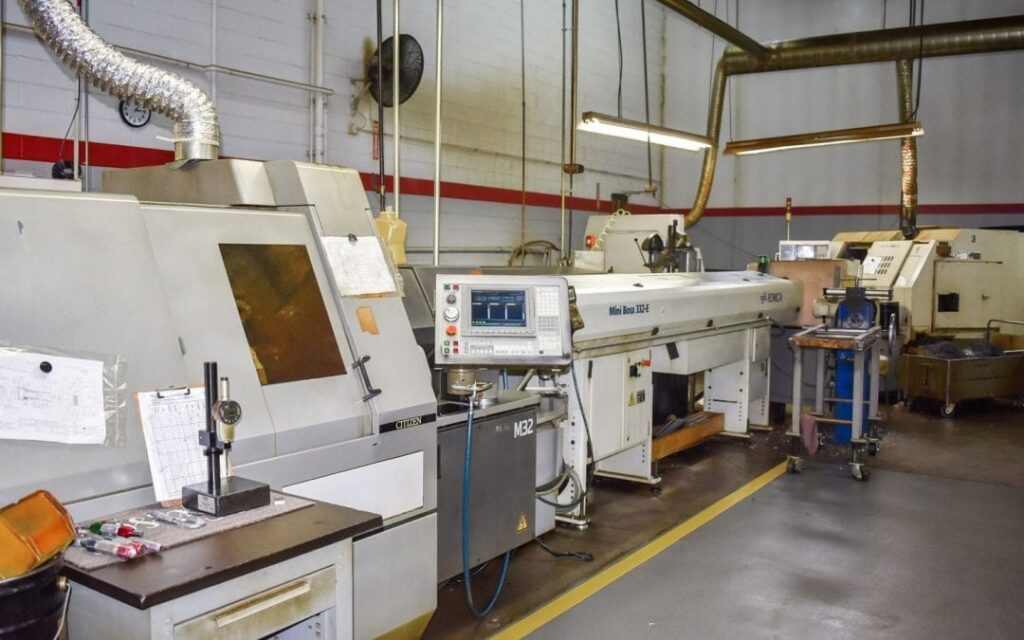
When tolerances tighten, risk rises. A tolerance of ±0.0002 inches is measured in single-digit microns, leaving little room for variation before parts fail inspection or disrupt downstream assemblies.
Many sourcing decisions start by comparing Swiss machining manufacturers, with the expectation that the right machine guarantees consistent results. In practice, equipment capability is only part of the equation. In regulated and mission-critical environments, precision depends just as much on how machining processes are controlled, documented, and sustained over time.
Swiss machining manufacturing brings clear advantages for small, complex parts, but those advantages only translate into reliable production when the surrounding systems are in place. Programming discipline, tooling strategy, inspection methods, and quality frameworks determine whether precision holds up beyond first articles.
This article explores Swiss precision manufacturing through that lens. It focuses on how the process actually works, where machine manufacturers fit into the picture, and what separates dependable machining partners from those that introduce hidden risk.
The goal is to help you evaluate Swiss machining capabilities with clarity and confidence, especially when quality, compliance, and long-term consistency matter.
Key Takeaways
- Swiss turning manufacturing is about process control, not just the machine. Equipment capability must be supported by disciplined programming, tooling, setup, and inspection.
- Swiss machining enables tight tolerances for small, complex parts. Guide bushings and single-setup machining reduce deflection and improve repeatability.
- Machine manufacturers define capability; machining partners determine results. Identical Swiss lathes can produce very different outcomes depending on execution.
- Regulated industries require more than precision. Compliance, documentation, traceability, and certified quality systems are critical to long-term success.
- The right Swiss machining partner reduces risk over a program’s life. Proven tolerance performance, prototype-to-production continuity, and inspection by default matter most.
What Is a Swiss Machining and Why Does Swiss Machining Manufacturing Matter in Precision Machining?
A Swiss machining is a CNC turning system designed to machine precision components with high dimensional control. Swiss lathe manufacturing refers to the process built around this system, where stability and repeatability are central to achieving consistent results.
At the core of Swiss machining manufacturing
- The workpiece is supported by a guide bushing positioned close to the cutting tool.
- This support limits deflection during cutting.
- Reduced deflection allows tighter tolerances and more uniform surface finishes.
Because the material is stabilized at the point of machining, the process maintains accuracy even as part complexity increases.
How the machining process differs
In Swiss turning manufacturing, the material advances through the machine while the tooling remains precisely positioned. This controlled movement enables continuous machining with minimal variation. Multiple operations can be completed in a single setup, improving consistency and reducing cumulative error.
It matters in precision machining because:
- Dimensional accuracy is maintained throughout the part, reducing variation as features are added or extended.
- Repeatability holds from the first article through production runs, limiting drift over time and across batches.
- Complex features are machined without sacrificing stability, allowing tighter tolerances without introducing deflection-related errors.
While Swiss turning manufacturers build the equipment that makes this approach possible, Swiss lathe manufacturing itself is defined by how effectively the process controls motion, support, and precision.
Common Types of Swiss Turning Machines Used in Precision Manufacturing
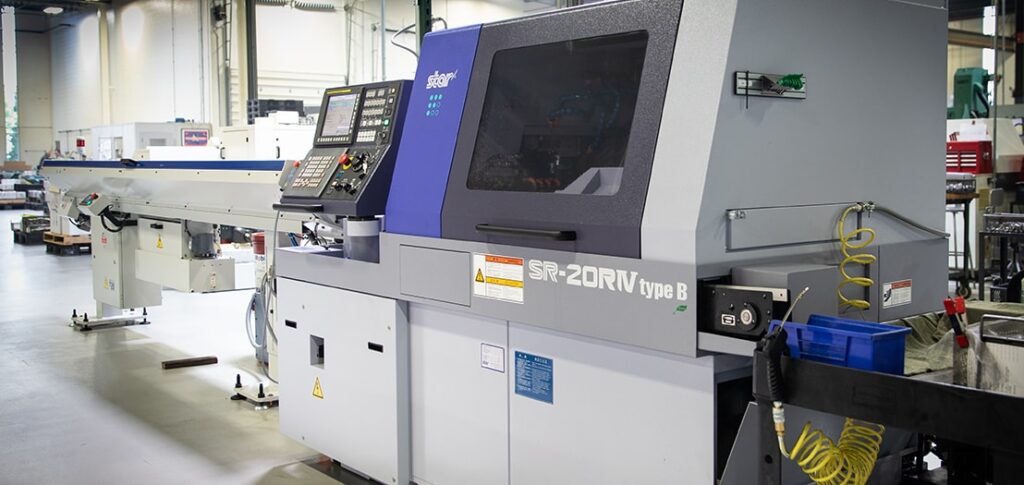
Swiss tunring are available in several configurations, each designed to meet specific machining requirements and production needs. While the core operating principle remains the same, differences in machine design influence part complexity, throughput, and process flexibility.
1. Single-spindle Swiss turning machines
- Designed for focused, high-precision turning operations.
- Well-suited for parts with simpler geometries or lower feature counts.
- Often used where consistency and tight tolerances are the primary requirements.
This configuration emphasizes control and repeatability within a streamlined setup.
2. Multi-spindle and multi-axis Swiss turning machines
- Support simultaneous machining operations.
- Enable more complex geometries to be produced in fewer setups.
- Improve efficiency for parts with multiple features or tight positional relationships.
These machines enable greater integration among turning, milling, and cross-drilling operations.
3. Swiss machining machines with live tooling
- Incorporate powered tooling for milling and secondary features.
- Reduce the need for additional machining steps.
- Improve part accuracy by minimizing re-clamping and repositioning.
Live tooling expands what can be achieved within a single machining cycle.
4. Automated and bar-fed Swiss machining systems
- Designed for continuous production and higher volume runs.
- Support consistent material feeding and cycle repeatability.
- Improve process stability across long production schedules.
Across these configurations, Swiss lathe manufacturers provide platforms with varying capabilities. In precision manufacturing, the type of Swiss lathe machine selected directly influences how efficiently and accurately a part can be produced within a controlled machining process.
Why Swiss machining Manufacturers Matter and Where Their Role Ends?
Swiss turning manufacturers play an essential role in enabling precision machining by designing platforms capable of tight positional control, synchronized motion, and multi-axis integration. Machine design establishes the mechanical limits of accuracy, rigidity, and repeatability that Swiss lathe manufacturing depends on.
That said, the machine itself represents only one layer of the overall manufacturing system. For precision part buyers, understanding where Swiss lathe manufacturers’ role ends helps clarify what truly drives part quality and consistency.
The role of Swiss machining manufacturers in the machining ecosystem
Swiss machining manufacturers are responsible for:
- Mechanical accuracy and rigidity of the machine platform.
- Control architecture for synchronized axes and live tooling.
- Automation capabilities such as bar feeding and part handling.
- Baseline repeatability under controlled conditions.
These factors define what the machine can achieve technically.
What the machine alone does not control
Once a Swiss turning is installed, the quality of the finished part is no longer determined by the machine manufacturer. Critical production outcomes depend on factors outside the scope of the equipment itself, including:
- CNC programming strategy and toolpath development.
- Tool selection, wear management, and change control.
- Fixturing and setup discipline.
- In-process measurement and verification methods.
These variables directly affect tolerance control, surface finish, and feature integrity.
Why this distinction matters in precision manufacturing
Within Swiss machining processes, consistent results are achieved when machine capability is paired with disciplined process control. Two identical machines can produce very different outcomes depending on how they are programmed, maintained, and validated over time.
For organizations sourcing precision components, this distinction shifts the evaluation focus away from the Swiss lathe manufacturer and toward the machining environment in which the equipment is operated. The machine’s potential is realized, but the manufacturing process determines performance.
What Actually Determines Part Quality in Swiss Turning Manufacturing?
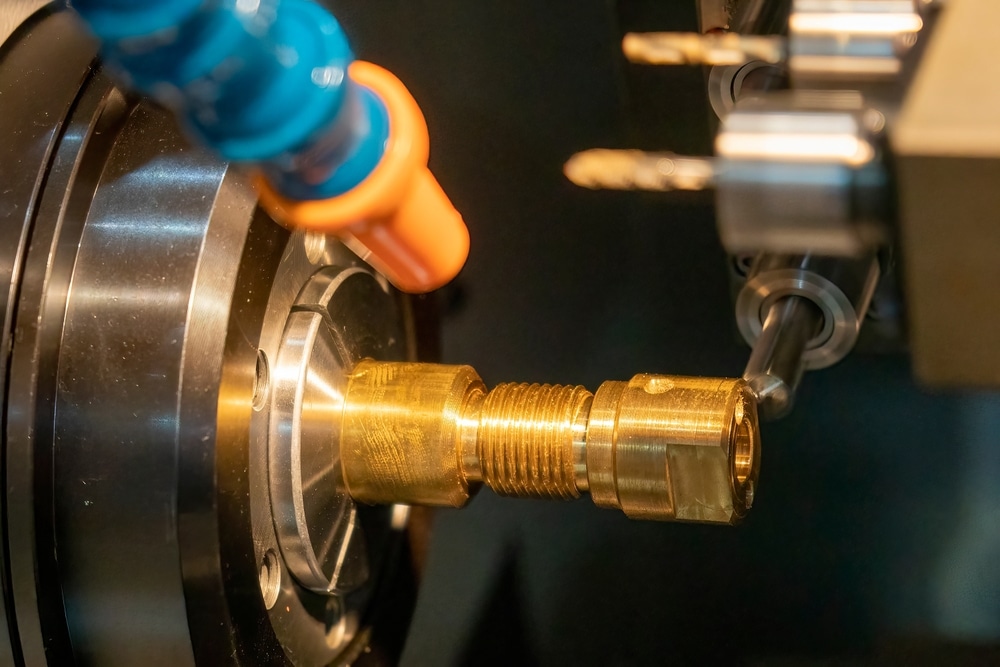
Across Swiss machining operations, part quality results from controlled execution throughout the entire machining process. While the machine establishes capability, consistent outcomes are driven by how that capability is applied, monitored, and sustained over time.
CNC programming and process development
Swiss machining requires precise coordination between material movement and tool engagement. Programming decisions influence:
- Feature sequencing and tool interaction.
- Thermal stability during extended run times.
- Control of tolerance stack-ups across multiple operations.
Well-developed programs reduce variation and improve repeatability across production volumes.
Tooling strategy and wear management
Tool performance directly affects dimensional stability. At the process level, quality depends on:
- Proper tool selection for material and feature geometry.
- Predictable tool life management.
- Controlled tool offsets and replacement schedules.
Without disciplined tooling control, even small amounts of wear can introduce measurable variation.
Set up discipline and process consistency
Swiss turning processes often involve complex setups with multiple tools operating in proximity. Maintaining part quality requires:
- Repeatable setup procedures.
- Controlled change management between runs.
- Clear documentation of process parameters.
This discipline ensures that results remain consistent from the first article through ongoing production.
Inspection, verification, and traceability
Quality is validated through inspection systems that align with tolerance requirements. Effective approaches include:
- In-process inspection to detect drift early.
- Final dimensional verification against engineering requirements.
- Lot control and traceability to support downstream quality needs.
Inspection is not a final step but an integrated part of the manufacturing process.
When Swiss turning manufacturing is supported by strong process control, variation is minimized, and performance remains predictable. Identical machines operated under different controls will not produce the same results. For precision applications, quality is determined by the system surrounding the machine, not the machine alone.
Swiss Machining in Regulated and Mission-Critical Industries
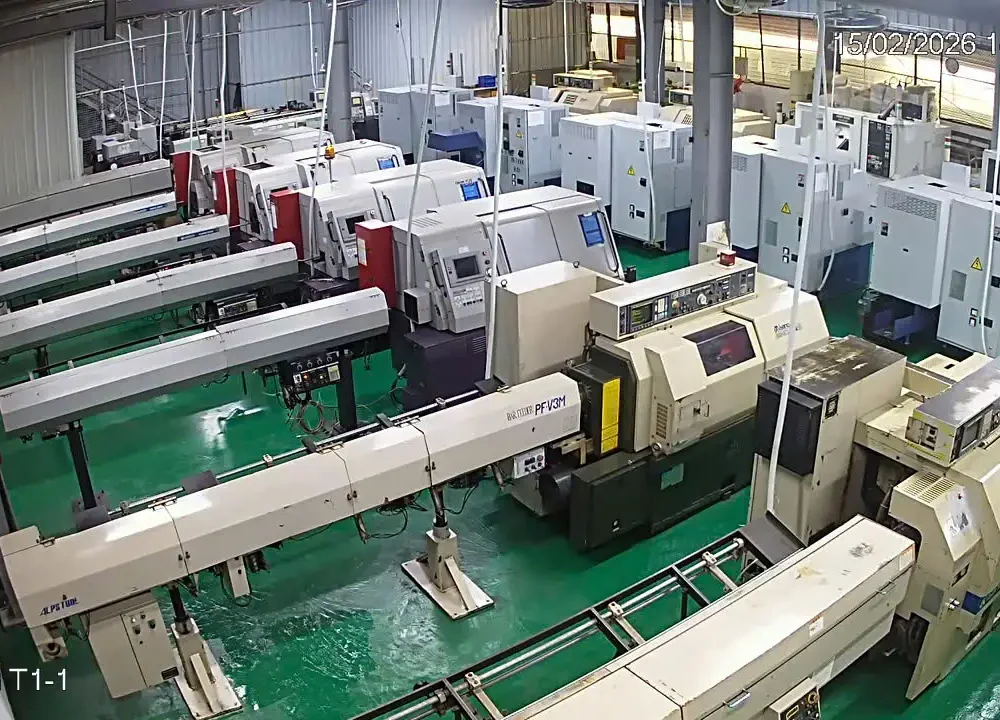
Several industries rely on precision components that must maintain dimensional accuracy, repeatability, and reliability across demanding operating conditions. Swiss machining supports these requirements by enabling tight tolerances, stable feature relationships, and consistent production of small, complex parts.
Key industry applications include:
Medical Devices
Components such as implants, surgical instruments, diagnostic assemblies, and micro-mechanical parts depend on Swiss machining to achieve fine features, controlled surface finishes, and repeatable dimensions. These applications often require validated manufacturing processes, inspection control, and traceability to support regulatory oversight.
Aerospace
Swiss machining is used for sensor housings, precision brackets, and small structural components where alignment, fit, and consistency are critical. Tight positional control and repeatability help ensure reliable integration into larger aerospace systems.
Defense and Military
ITAR-controlled components, guidance-system hardware, and precision mechanical parts rely on Swiss machining for predictable outcomes across batches and long-term programs. Process discipline and documentation support consistent quality within controlled supply chains.
Photonics and Optics
Laser housings, optical mounts, and alignment components require dimensional stability and precise feature relationships. Swiss machining supports consistent geometry and surface quality, which are essential for maintaining optical performance.
TDB Precision Machining supports Swiss machining programs across these regulated and mission-critical industries, managing tight tolerances, complex geometries, and documentation requirements within a controlled manufacturing environment.
How to Evaluate a Swiss Machining Partner?
When you source Swiss-machined components, focusing only on the equipment can lead to avoidable risk. Part quality, delivery consistency, and audit readiness depend far more on how the machining operation is structured and controlled.
A practical evaluation looks at the following factors:
- Certified quality systems: Look for accredited frameworks such as ISO 13485 and ISO 9001. These systems indicate that machining processes are documented, changes are controlled, and corrective actions are addressed systematically. In regulated environments, this structure directly supports repeatable outcomes across production runs.
- Regulatory registrations and compliance: Confirm registrations, such as ITAR and DFARS, where applicable. These registrations show that the machining partner operates within controlled supply chains and understands the compliance expectations tied to regulated and defense-related programs.
- Proven tolerance capability: Swiss machining is often selected for tight dimensional requirements, but capability should be demonstrated with data. A qualified partner can consistently hold demanding tolerances, including requirements around ±0.0002”, supported by inspection results rather than assumptions.
- Prototype-to-production continuity: Evaluate whether the same team supports both early-stage prototypes and full production. Continuity reduces handoff risk, preserves process knowledge, and helps maintain dimensional consistency as programs scale.
- Inspection and documentation included by default: Inspection and documentation should be standard practice, not optional services. This includes dimensional inspection, certificates of conformance, traceability records, and documentation aligned with customer and regulatory requirements.
- Relevant industry experience: Prior experience in regulated or mission-critical industries provides essential context. Partners familiar with these environments understand how tolerance, documentation, and quality expectations intersect in real production scenarios.
Evaluating Swiss machining partners using these criteria helps you identify suppliers that prioritize consistency, compliance, and long-term reliability.
Why Swiss Machining at Criterion Precision Machining Is Built for Regulated Production?
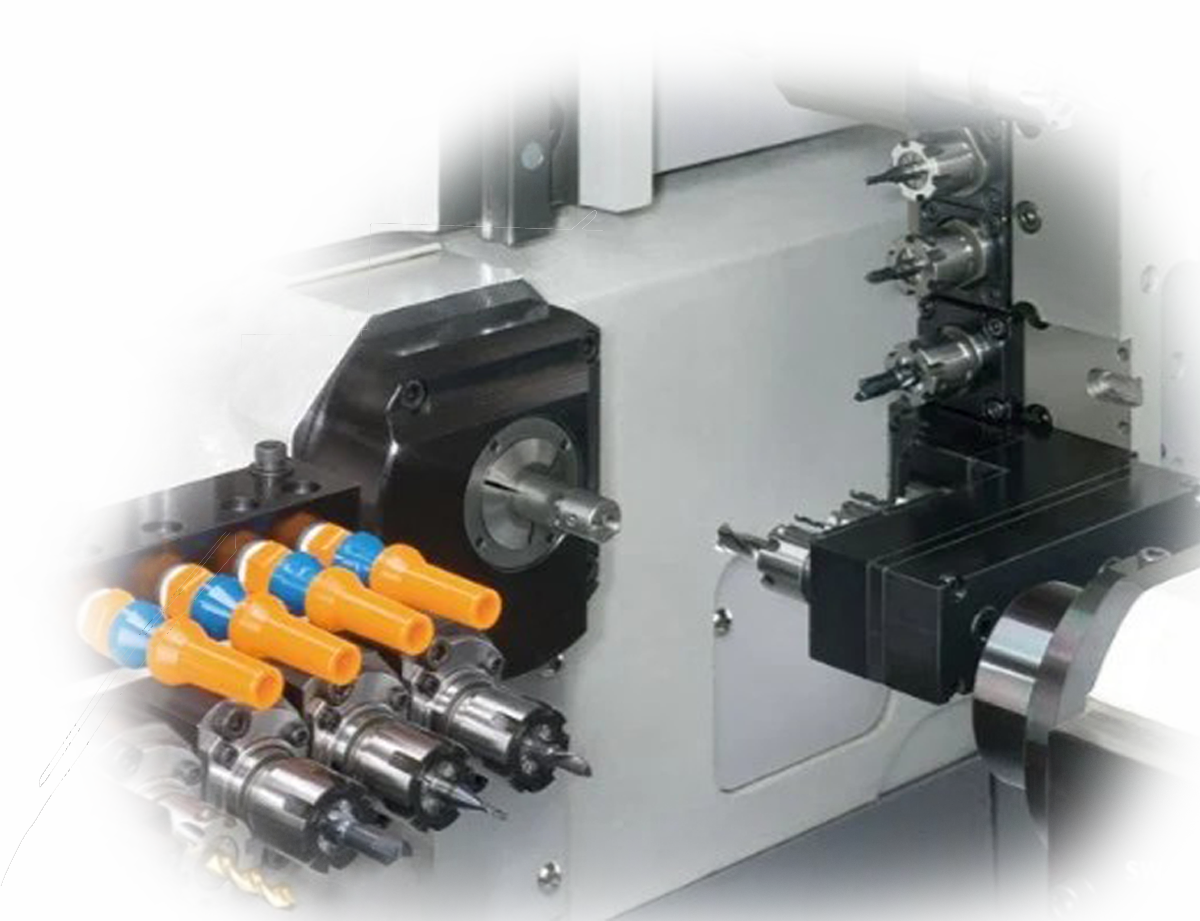
Selecting a Swiss machining partner is not simply a question of machine capability. Many Swiss machining providers own capable equipment, but lack the process discipline, quality integration, and program continuity required to manage risk in regulated environments.
At TDB Precision Machining, Swiss turning is structured as a controlled manufacturing system. The focus is not just on achieving tight tolerances once, but on sustaining them across qualification, audits, and long-term production without introducing variability or compliance risk.
Here are the core areas where Criterion’s Swiss machining approach reduces risk in regulated production.
Swiss turning within a certified quality framework
Our Swiss machining programs operate under ISO 13485– and ISO 9001-certified quality systems. We document processes, validate them where required, and monitor performance continuously to support repeatability across production runs and audit readiness.
Compliance aligned with regulated supply chains
Criterion is both ITAR-registered and DFARS-compliant. These registrations allow Swiss-machined components to move directly into medical, aerospace, and defense programs without additional supplier qualification steps.
Demonstrated tight-tolerance performance
We regularly support demanding dimensional requirements, including tolerances down to ±0.0002”. This capability is backed by inspection data, controlled processes, and experienced machinists rather than theoretical limits.
Prototype-to-production continuity
The same Swiss machining capabilities support early prototypes, pilot builds, and full production programs. This continuity helps reduce variation, preserve process knowledge, and scale production without changing suppliers or requalifying workflows.
Inspection and documentation as standard practice
Dimensional inspection, certificates of conformance, and traceability documentation are included in standard delivery. Our quality reporting supports customer audits and internal review without adding friction to the process.
For organizations operating in regulated or zero-failure environments, Swiss machining at Criterion Precision Machining is structured to reduce risk, support compliance, and deliver consistent results throughout a program’s life.
Final Thoughts!
Choosing among Swiss lathe manufacturers ultimately comes down to confidence. Confidence that tolerances will hold, documentation will be complete, and production will remain stable as programs evolve. Those outcomes come from disciplined execution, not from equipment alone.
For organizations operating in regulated or mission-critical environments, Swiss lathe manufacturing must operate as a controlled system that supports reliability over time. When that system is in place, precision becomes predictable rather than reactive.
At TDB Precision Machining, we support Swiss machining programs with that long-term mindset. If you are planning new programs or reassessing existing suppliers, speak with our experts or contact us to discuss how our Swiss machining capabilities can support your requirements with consistency and confidence.
FAQ’s
1. What tolerances can Swiss machining realistically hold?
Swiss machining can reliably hold micron-level tolerances when parts are designed appropriately, materials are stable, and processes are validated through capable inspection and ongoing statistical control.
2. When should Swiss machining be chosen over conventional CNC turning?
Swiss machining is preferred when parts are long and slender, feature dense, or require tight tolerances that conventional CNC turning struggles to maintain consistently across production runs.
3. What design considerations improve success with Swiss machining?
Designs optimized for Swiss machining minimize unsupported lengths, balance feature sequencing, allow realistic tolerances, and consider tooling access early to improve yield and cost efficiency overall outcomes.
4. How does Swiss machining impact part inspection requirements?
Swiss machining often increases inspection rigor because tolerances are tighter, requiring advanced metrology, in process checks, and documented measurement plans aligned with customer and regulatory expectations standards.
5. Are engineering changes more costly in Swiss machining programs?
Engineering changes after approval can be more costly in Swiss machining due to validated programs, tooling investments, and documentation updates required to maintain controlled production environments stability.
Related Categories: Swiss machining